
Case study
Building NFTs Guard MVP
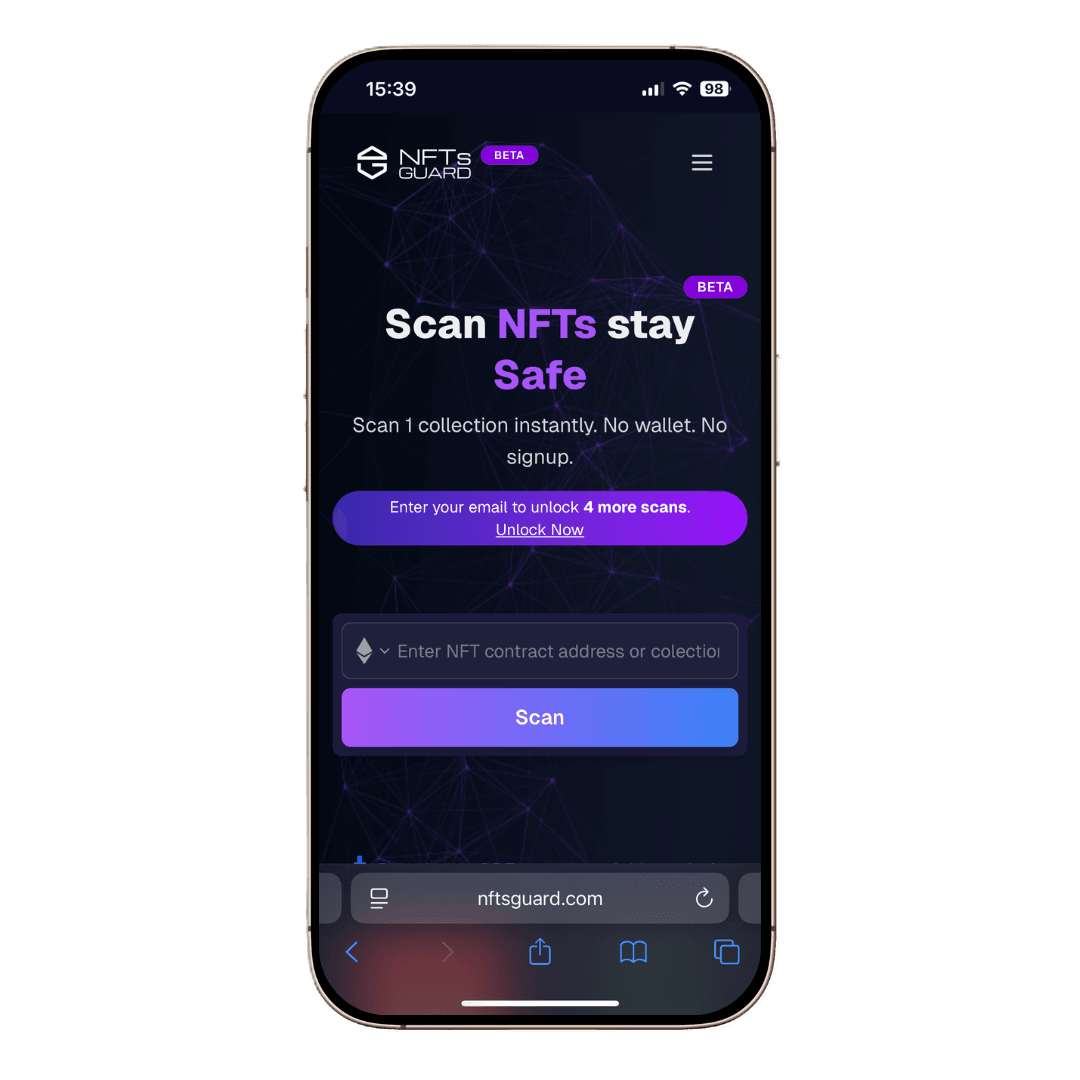
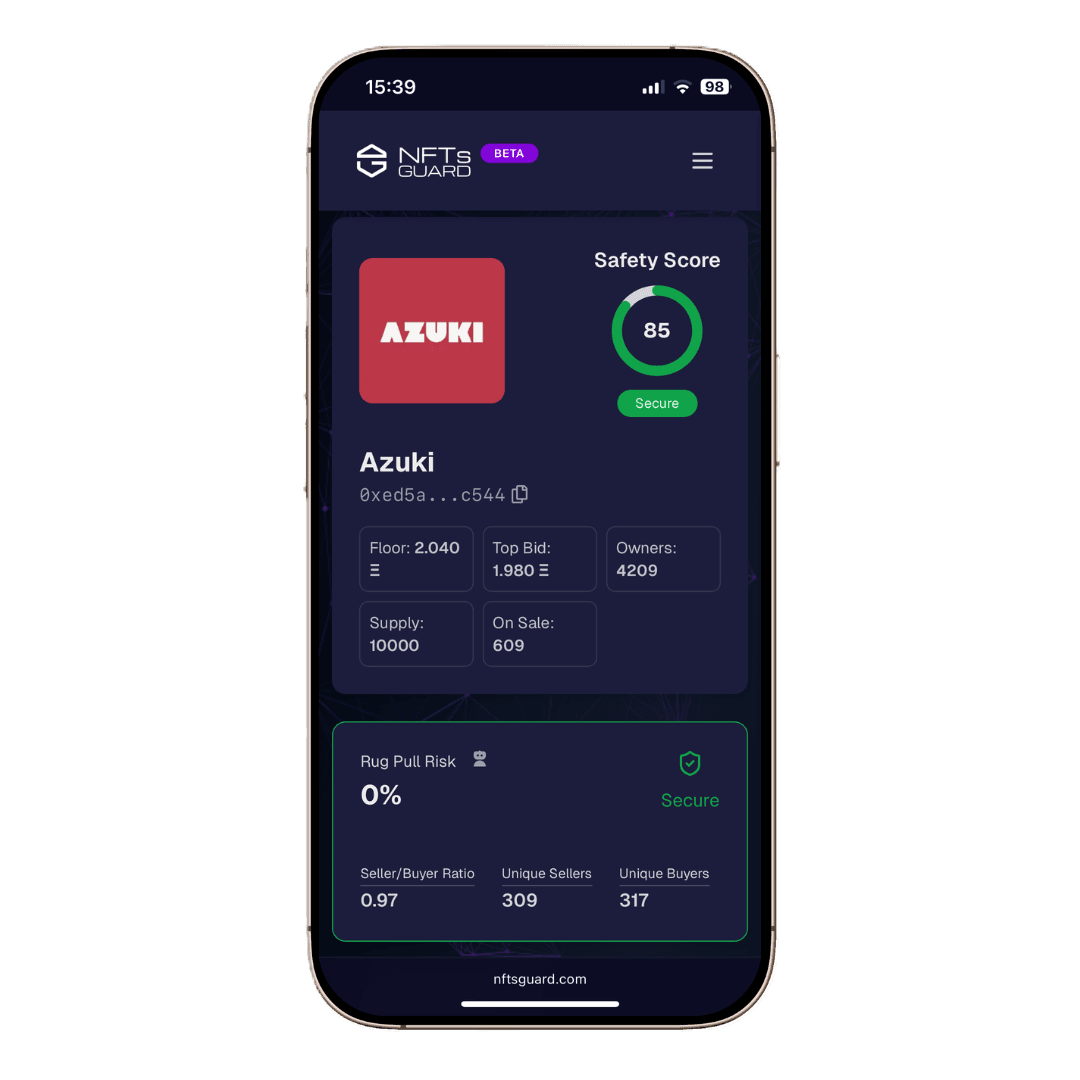
NFTs Guard is an MVP security platform built to explore risk detection in NFT ecosystems. The project follows a Web2-first architecture that consumes and processes blockchain data, transforming raw on-chain activity into clear, actionable insights.
The platform helps users identify suspicious patterns in wallets and NFT collections through a fast, intuitive dashboard designed for both technical and non-technical users.
Background
From idea to MVP
The project started with a simple idea: make on-chain risk signals easier to understand for everyday NFT users. What initially seemed like a relatively small product quickly revealed the complexity behind blockchain data, performance constraints, and usability challenges.
From early research and wireframing to interaction design and implementation, the project evolved through continuous iteration, trade-offs, and technical decisions aimed at keeping the MVP focused and realistic.
Problem
NFT markets are highly exposed to manipulation patterns such as rug pulls, wash trading, and whale-driven price movements. While blockchain data is transparent, identifying these patterns requires technical knowledge and manual investigation.
"We turn raw on-chain noise into actionable alerts."
Scope & Responsibilities
Full solo project lifecycle
NFTs Guard was developed as a solo project, covering the entire product lifecycle from concept definition to a production-ready MVP. Responsibilities included:
- — Defining the product concept and MVP scope
- — UX/UI and interaction design
— Frontend development using Next.js, TypeScript, and Tailwind CSS
- — Backend logic and database design with Supabase and PostgreSQL
- — Integrating Ethereum blockchain data as an external data source
- — Designing heuristic-based risk detection and scoring logic
- — Performance optimization and system stability
Challenges
Technical Challenges
One of the main challenges was working with raw blockchain data in a traditional Web2 architecture. While the data is public, it is noisy, inconsistent, and not designed for direct user consumption.
MVP decisions
Key architectural trade-offs
Results
Outcome
NFTs Guard demonstrates the ability to design and deliver a production-oriented Web2 application that leverages blockchain data without unnecessary complexity. The project highlights end-to-end ownership, pragmatic decision-making, and a strong focus on usability and performance.